GREEN ROAD
Construction of a residential building
Close to large housing estates and the French border, the area where the villas on Chemin du Foron remain stands out today as an anachronistic enclave. Built mainly in the 1950s, this handful of ordinary houses looks out of place in a constantly changing area that reflects the Geneva authorities' ambition for urban development.
The potential for densification is clearly identified and requires a long-term strategy. The planning of new buildings must therefore combine the constraints of today's zoning with official projections for tomorrow. In order to maintain positive momentum and avoid bureaucratic delays, the plots concerned are subject to specific negotiations. In order to get the project off to the best possible start, the key players – owners, public authorities and architects – are working to a rolling schedule spread over a period of around 15 years. This timescale allows for the complete transformation of the site to be envisaged in a gradual manner, in line with the vast changes taking place in the surrounding area. To achieve this, the first new buildings will themselves have to be capable of increasing their living space in line with the minimum legal requirements that will apply at a later date.
Questions concern the scale and form of future developments, as well as how they should relate to the large buildings planned for the surrounding area. In an area steeped in history that struggles to contain a disjointed built environment, the option of cluster-based urban planning has been chosen, with very simple volumes to give the urban area a new image, halfway between detached houses and apartment buildings. In the interests of consistency and rationality, the sharing of car park ramps and the presence of open, communal gardens aim to link each building planned as part of this operation with its neighbour.
Bordered to the north by the road and to the south by the greenway, the plot in question is proving to be the catalyst for the development of the neighbourhood. The new building permit application marks the concrete start of the process and paves the way for the construction of a contemporary residential building that is perfectly suited to its context. It also embodies a clear vision for the future of the area and, more specifically, demonstrates the success of the consultations held between partners.
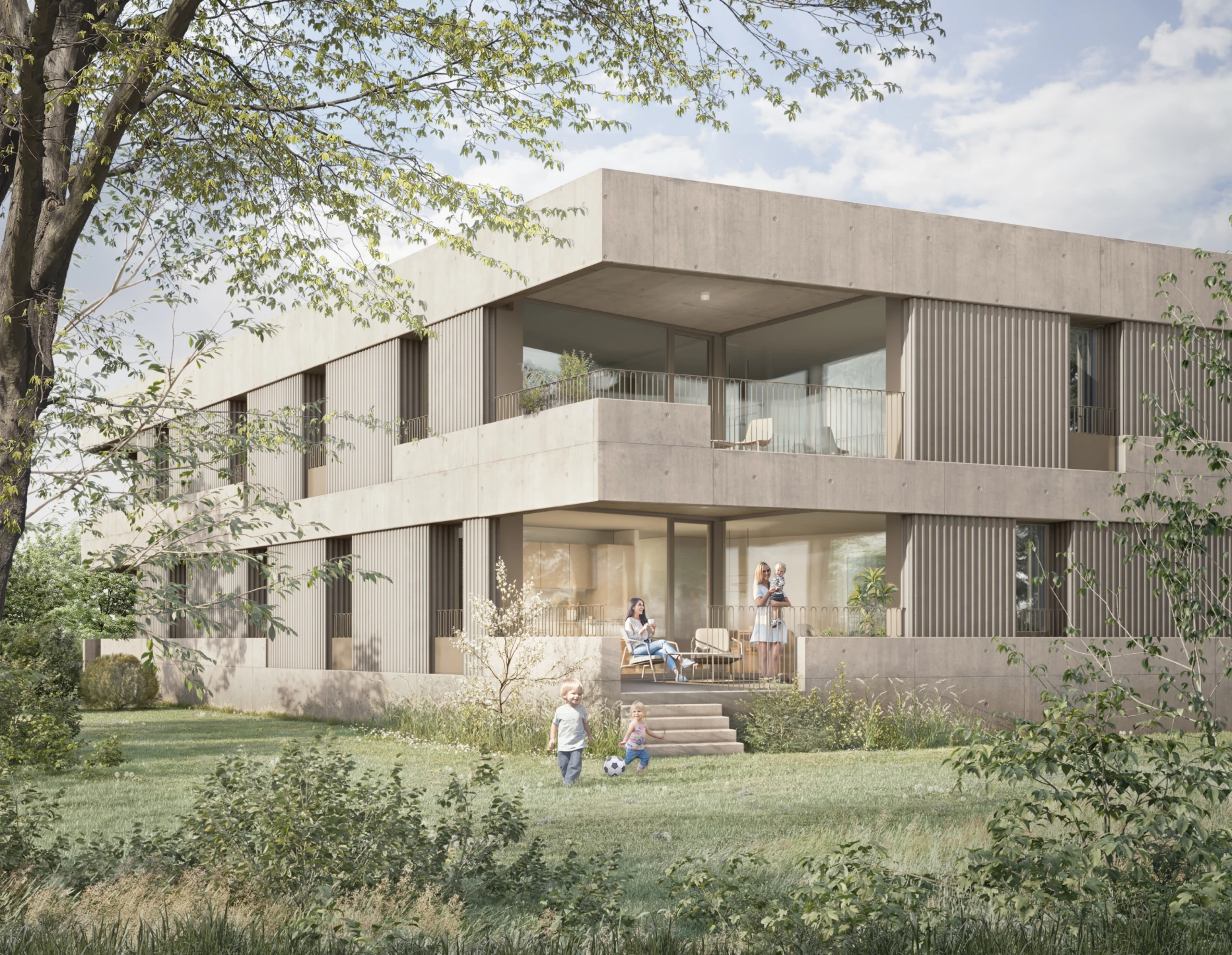
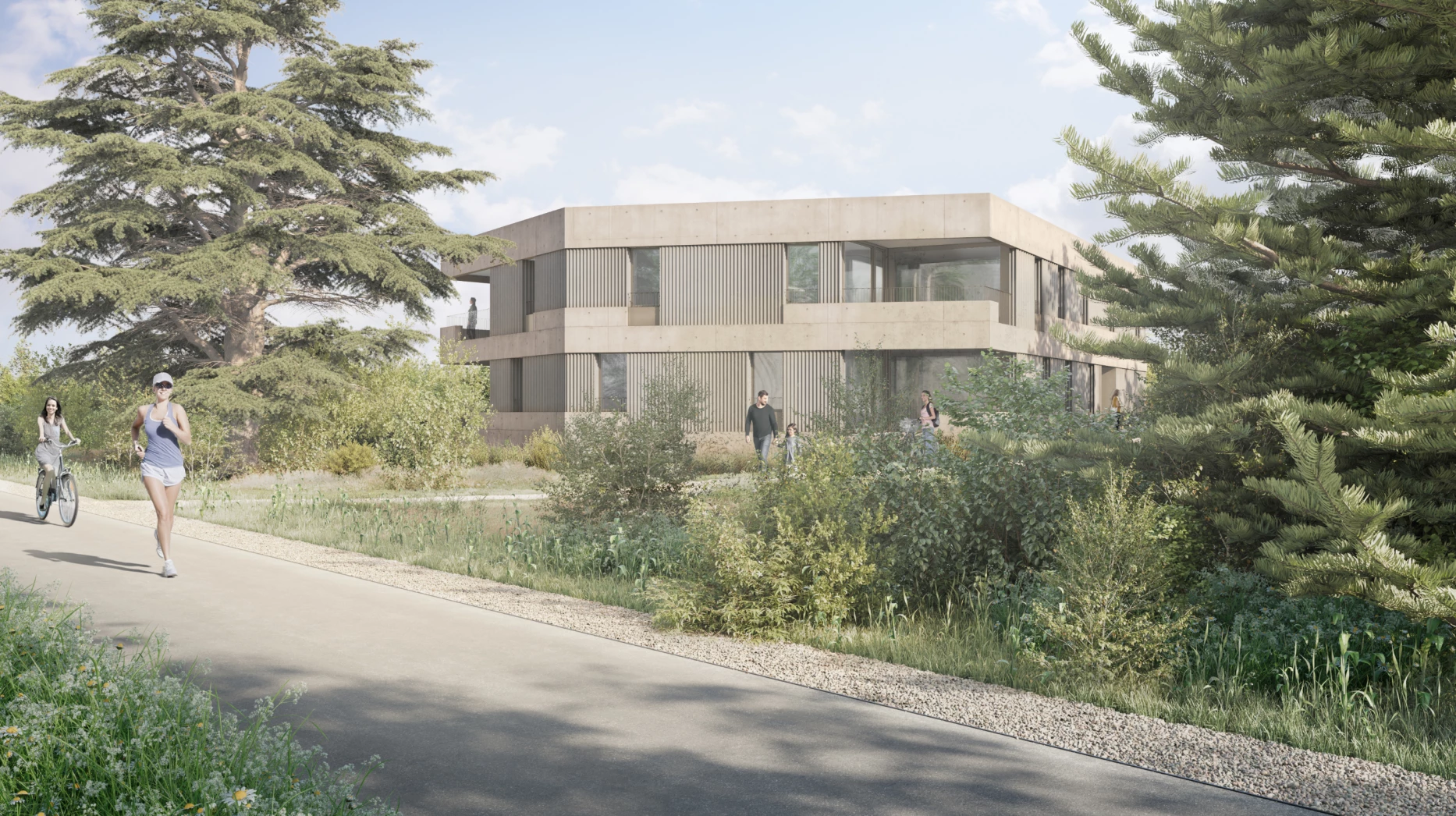
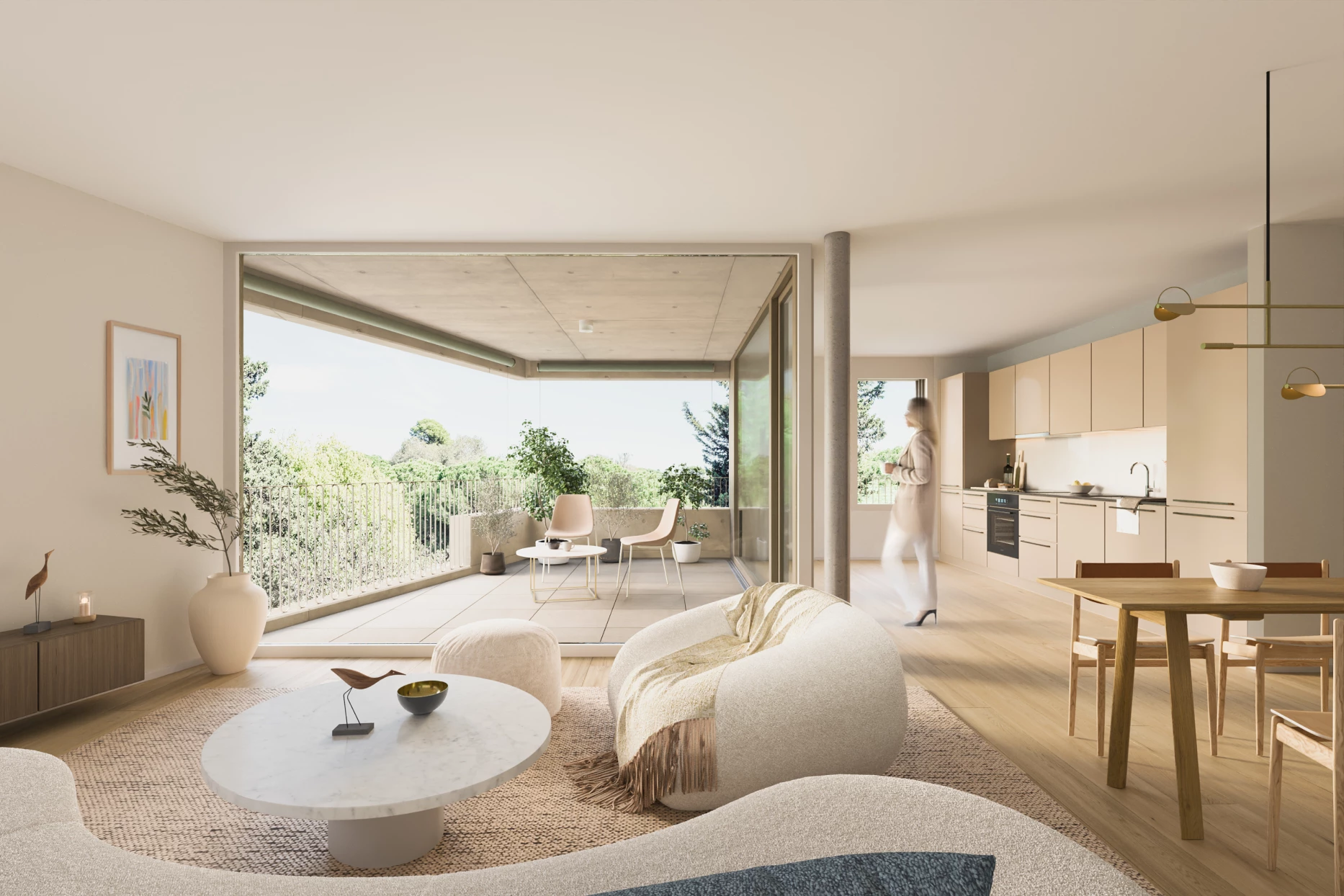
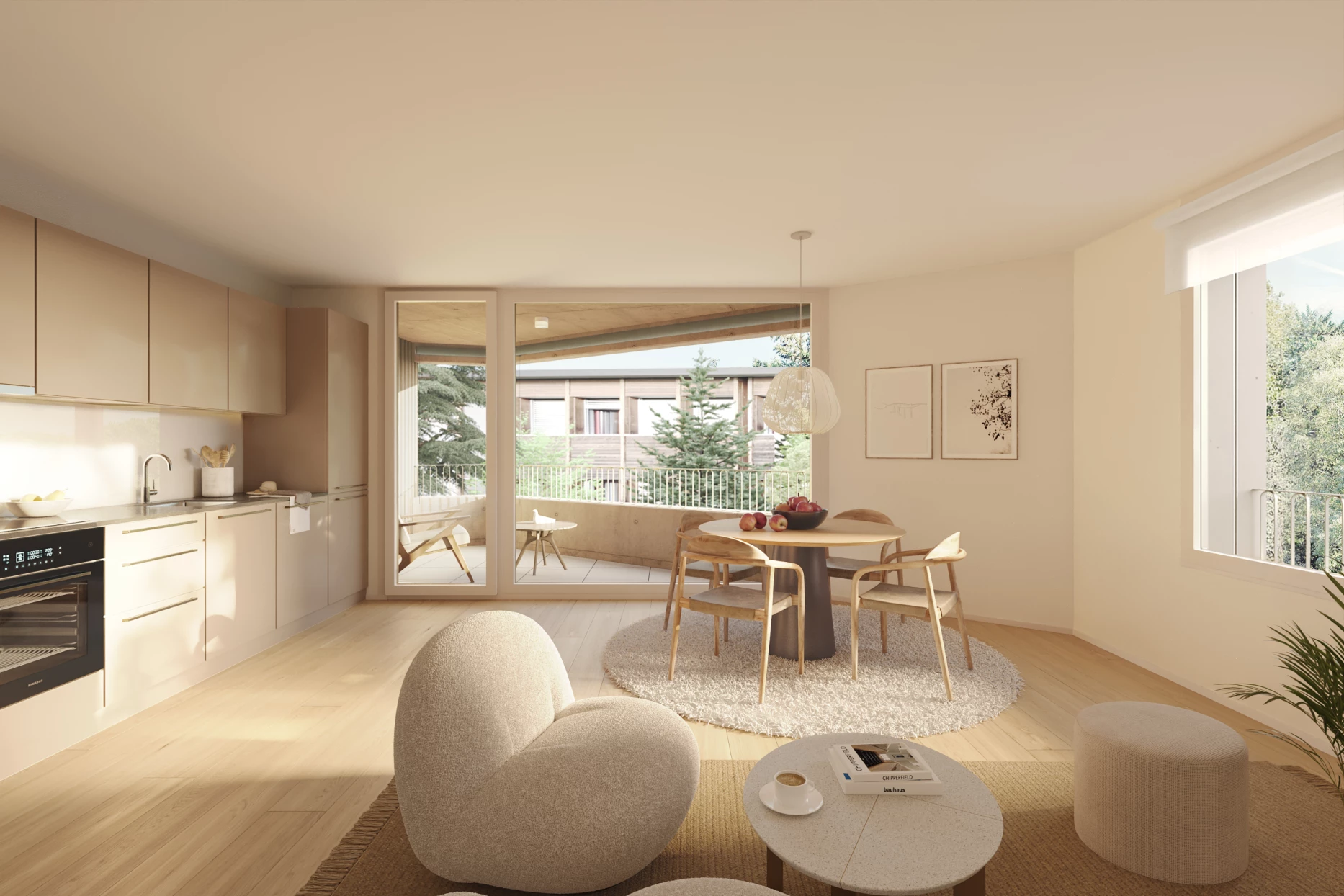
The project features an irregular hexagonal prism housing a total of eight three- to five-room flats, all in line with market expectations, under a two-storey structure. The unusual shape responds to the constraints and unique features of the site, with its trapezoidal shape and interesting trees that needed to be preserved. The garage ramp slides partially under the slightly raised volume, ensuring privacy for the ground floor apartments while also cleverly reducing excavation costs. Enjoying at least two orientations, the flats radiate around shared stairwells and lifts nestled in the centre of the volume. They also feature spacious corner loggias, which serve as an outdoor extension of the living areas.
The rational implementation favours the use of reinforced concrete, in line with the large interior spans. This is an effective choice that also meets the engineering requirements of the future elevation, which is necessary to achieve the legal densification objectives. Added as an attic during the second phase of construction, this top floor will offer two additional flats surrounded by attractive terraces. The principle is simple and adaptable to all neighbouring buildings that will spring up in this area.
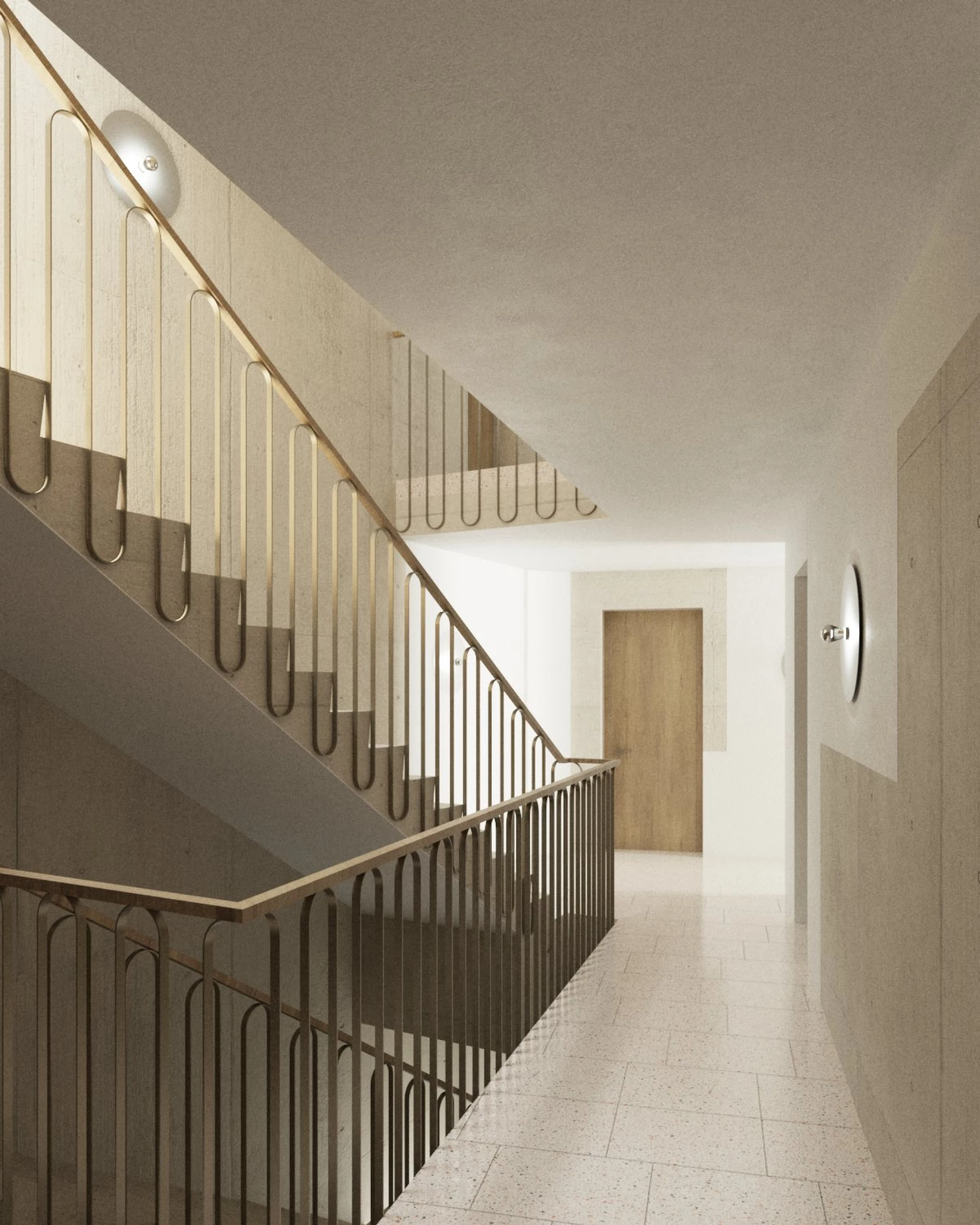
Offering a sense of protective solidity, the bold mineral expression avoids monotony through the contrasting interplay of solids and voids. The bold masses and taut lines of the slab heads display a sober vocabulary, elegantly enhanced by large ribbed surfaces in fluted concrete. The texture is supported by warm tones, close to natural colour references marked by wood, stone and earth.